Worcester Polytechnic Institute·
Biomedical Engineering & Robotics Engineering

Human-Centered Engineering for Mobility Lab

Our mission

Understanding how people move to shape assistive technology around real mobility needs.

We combine experimental and computational approaches in biomechanics and motor control to understand how wearable robots affect movement. We strive to develop adaptive systems that respond to the values and lived experiences of the communities we work with.

What we study

Research Directions

01

Motor Control in Context

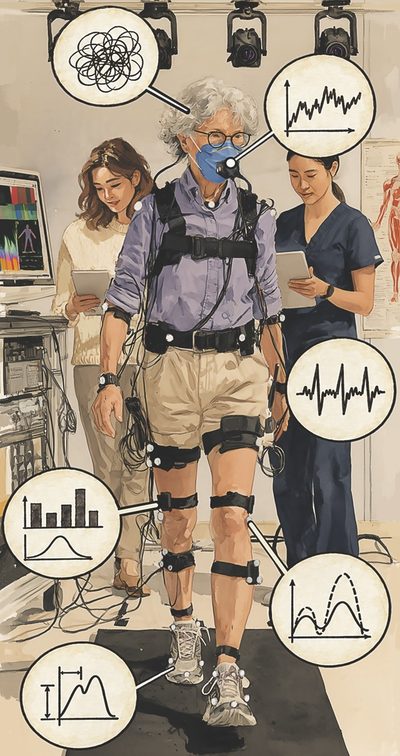
Movement in daily life requires people to coordinate their bodies with changing goals and surroundings. We study how the nervous system balances competing demands—including speed, effort, and stability—and how these tradeoffs change with age, environment, and neuromotor disease. Our work uses computational models of movement to develop and test explanations for how motor control operates outside of tightly constrained laboratory tasks.

Keywords wearable sensing · musculoskeletal simulation · inverse optimal control · machine learning
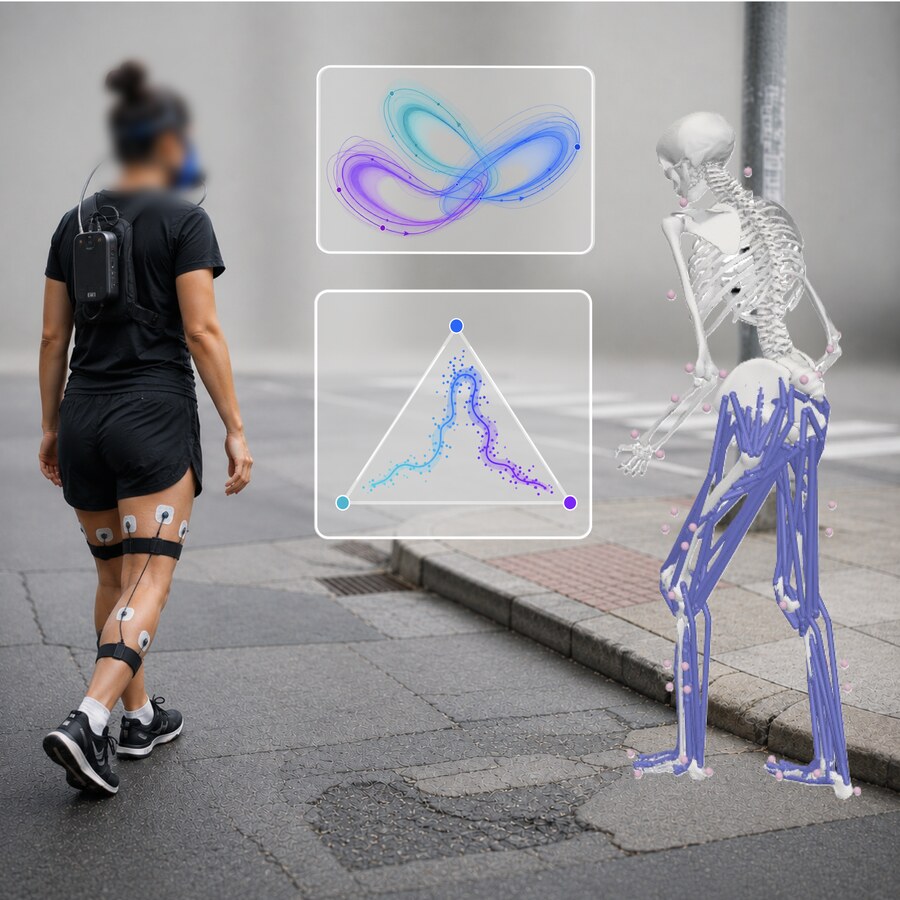
Musculoskeletal simulation of a walking figure alongside a plot of the tradeoffs between speed, balance, and accuracy that shape movement.
02

Human-Centered Device Optimization

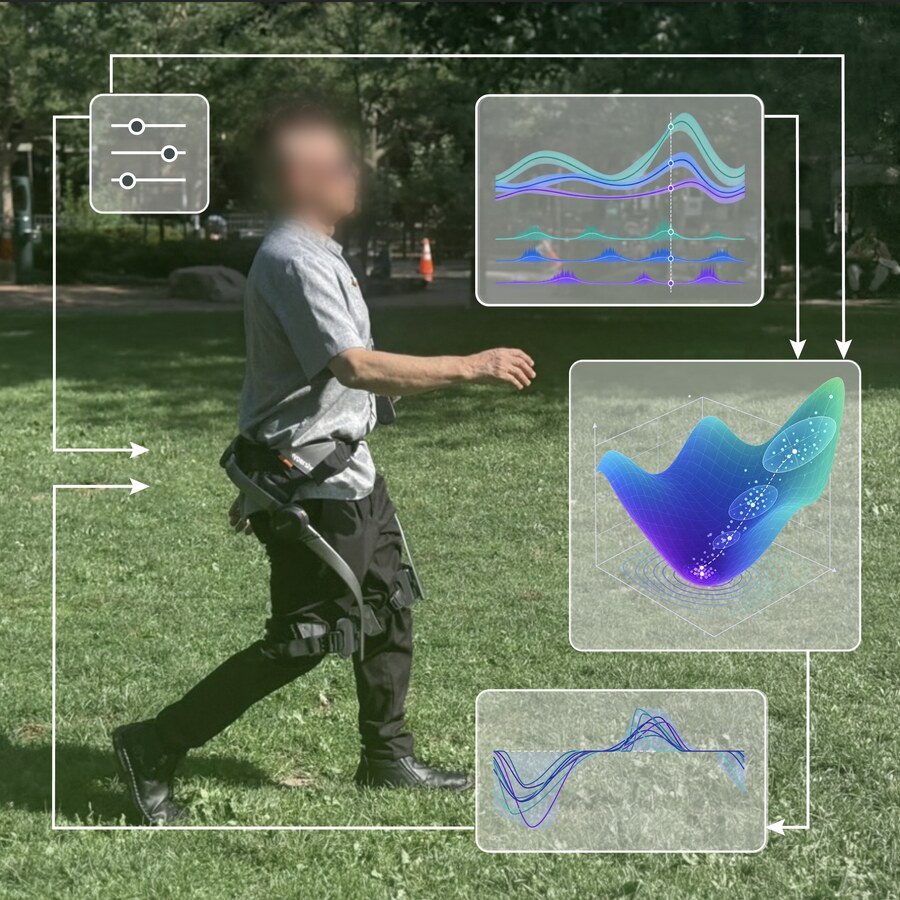
Assistive devices alter the mechanics of movement, shaping both physical performance and perceptual responses such as effort, comfort, and agency. These responses evolve as users adjust their movement strategies through repeated interaction with the device and as their capabilities change. We use human-in-the-loop optimization to personalize device behavior over time and study what determines whether assistance is adopted rather than abandoned.

Keywords exoskeleton hardware and control · human-in-the-loop optimization · mixed-methods studies

Person walking in a park wearing a hip exoskeleton.
03

Augmented Feedback for Motor Learning

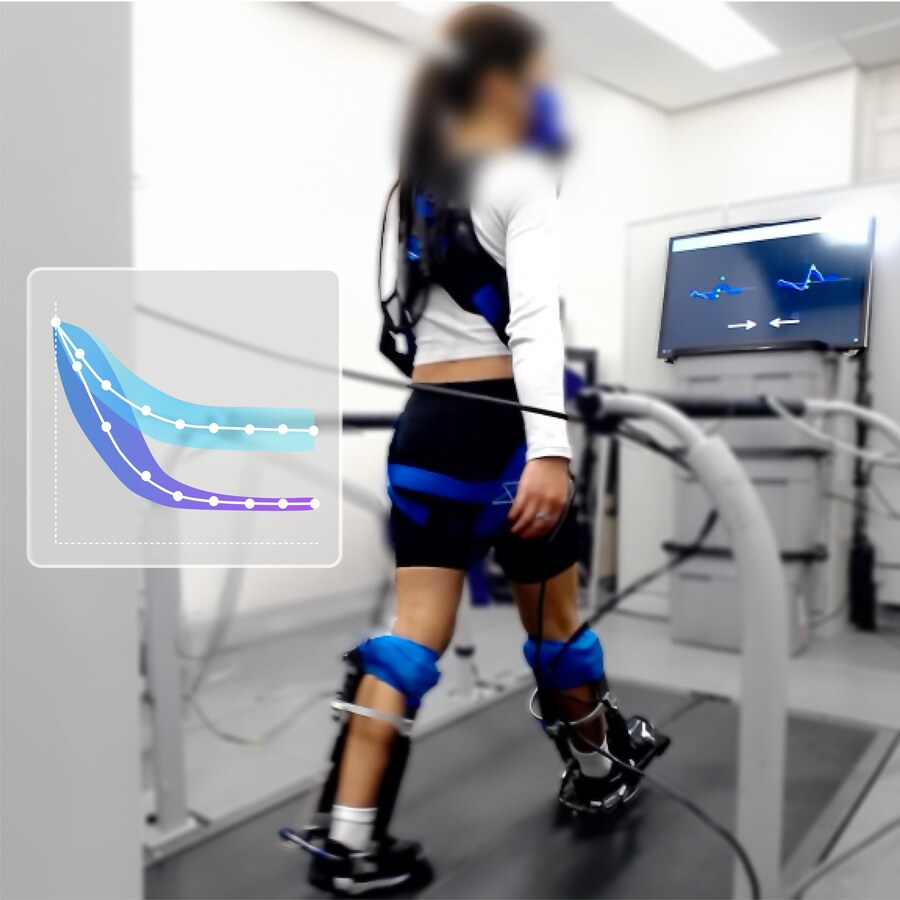
Motor skill learning depends on interpreting cues from the body and environment, which can be supplemented by sensorimotor feedback such as haptics, visuals, or verbal instruction. We design real-time feedback to support motor learning, asking which signals meaningfully aid learning under which conditions, and whether skills learned under augmented feedback transfer to unsupervised, real-world performance.

Keywordsreal-time biofeedback · haptics · sensorimotor processing · motor learning and retention

Person walking on a treadmill with ankle exoskeletons while a monitor provides real-time visual biofeedback about their movement.

How we work

A Human-Centered Engineering Framework

Supporting mobility with technology requires more than building a device. It requires understanding what matters to people, translating those priorities into meaningful goals, connecting them to how bodies and environments work, and evaluating whether the resulting systems help in everyday life.

Our Human-Centered Engineering Framework maps these interconnected activities, holding human experience as central throughout the research process. Although shown as stages, the process is iterative, with insights from each stage shaping the others.

Listen

Understanding how a person experiences mobility in the context of their values, identity, needs, and goals.

Encode

Representing insights as qualitative and quantitative data that can be systematically analyzed and used to develop testable models.

Integrate

Connecting models of biomechanical, neural, and psychosocial processes to understand how they jointly shape human movement and behavior.

Design

Creating physical systems and interfaces whose form and function are informed by integrated models of movement and behavior.

Operationalize

Developing personalized control strategies that adapt device behavior to each person as they move.

Validate

Evaluating effectiveness beyond the laboratory, in the context of people's everyday lives.

Current focus

Each of these stages represents an important area of discovery, design, and collaboration. Our published and ongoing work focuses primarily on Encode and Operationalize: inferring movement priorities from behavior and building devices and control strategies that respond to them. Fully realizing this vision will require expertise and collaboration across the entire framework, guided by the communities we work with.