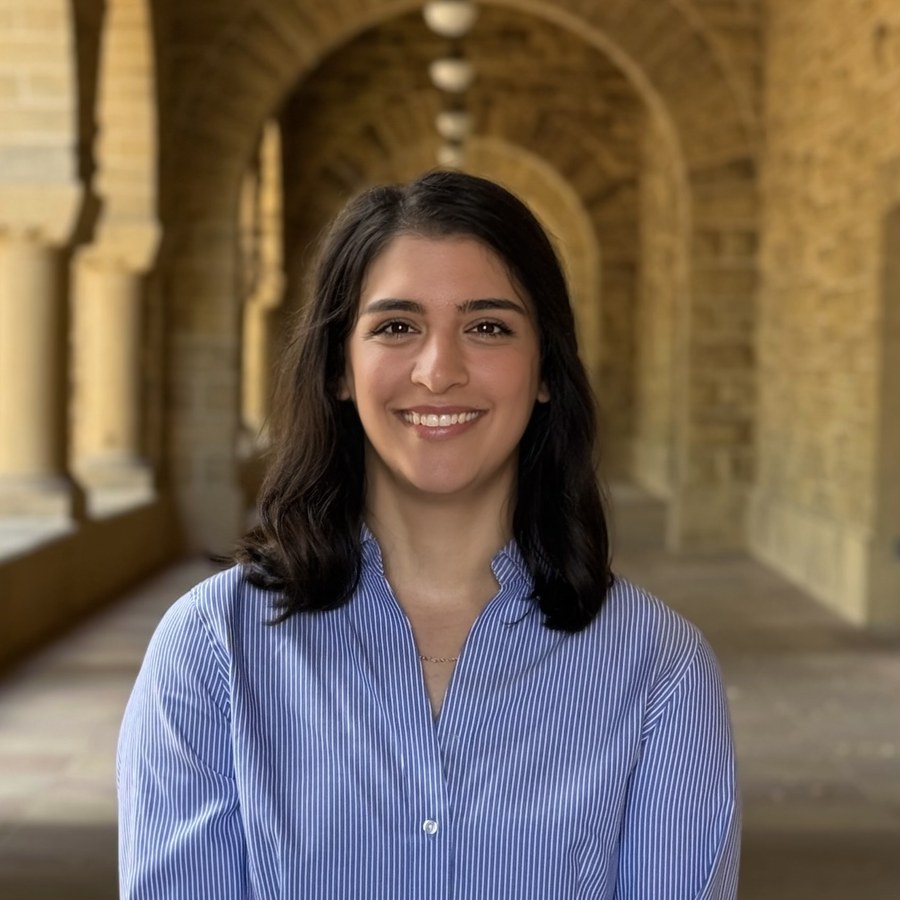
Portrait of Ava Lakmazaheri
Human-Centered Engineering for Mobility Lab

Ava Lakmazaheri

Principal Investigator

PhD, Mechanical Engineering, Stanford University

BS, Mechanical Engineering, Olin College of Engineering

Curriculum Vitae

My work has been guided by a longstanding interest in helping people move through the world with greater ease and satisfaction. Mobility is a fundamentally multidisciplinary problem, and my path into this research has crossed engineering, design, neuroscience, psychology, and philosophy. The timeline below traces how these experiences have shaped the questions I ask and the ways I approach them. I share it not as a model to follow, but as one example of how students can build toward a goal across different kinds of experience. There is no single route into this work; what matters is deepening your understanding of the problems you want to help solve.

Timeline

2014–2016High School

Introduction to Assistive Technology

Independent Research, Thomas Jefferson High School for Science and Technology

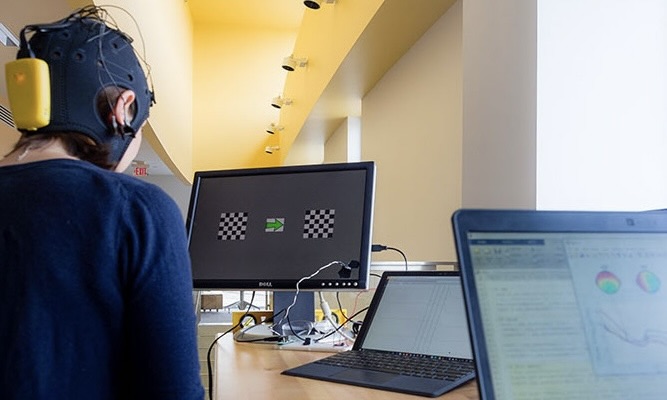
Inspired by BrainGate's work restoring movement for a person with tetraplegia, I ran an independent project in brain-computer interfacing, mapping brainwaves from a commercial EEG to natural-language commands for a custom humanoid robot and a miniature hybrid wheelchair. This project was an early lesson in systems-level integration across hardware, software, and the person operating them.
2016–2020Undergraduate

Engineering, Neurotechnology, and Disability Studies

Mechanical Engineering, Olin College of Engineering

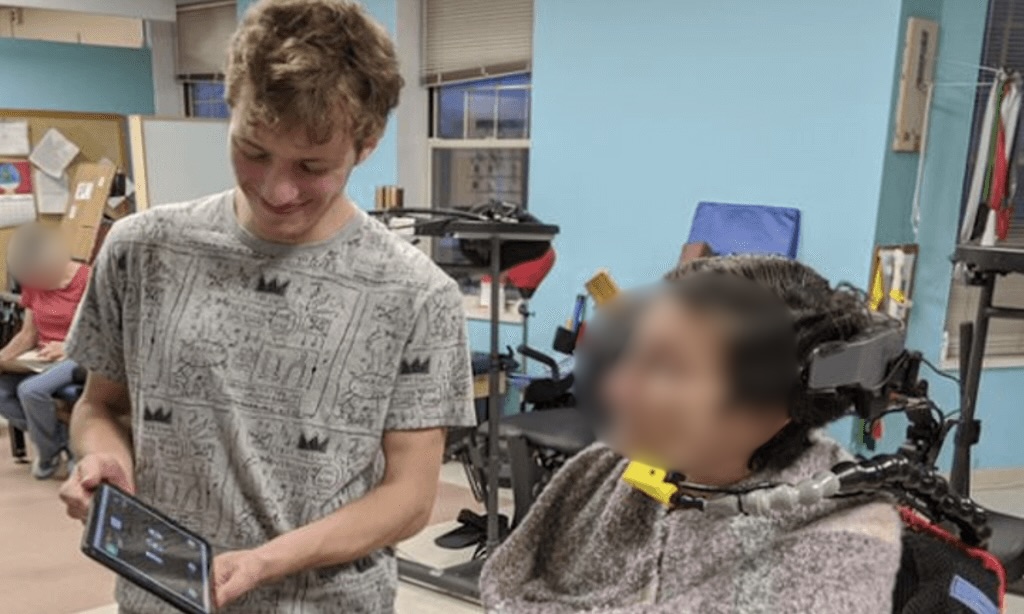
Olin's project-based curriculum taught me to design with, not for, providing the roots of the human-centered design principles I still build from. I helped launch and spent four years in the Human Augmentation Laboratory researching attention-responsive brain-computer interfaces and conducted research on how psychological self-concept changes after acquired disability. In a year-long engineering capstone, I worked with powered wheelchair users to co-design new physical and graphical interfaces to enhance personal mobility. I also cross-registered at Wellesley College to study ethics and justice with a humanities capstone project examining concepts of the body, assistive technology, and interdependence through pieces from disabled artists.

Person wearing an EEG cap facing a screen with two flickering checkerboard targets while laptops display live brainwave traces. Student showing a tablet control interface to a powered wheelchair user during a co-design session.
2020–2025Doctoral

Personalizing Exoskeleton-Assisted Gait for Older Adults

Mechanical Engineering, Stanford University

My doctoral research centered on co-adaptive human-exoskeleton interaction to assist walking. I worked with older adults navigating age-related mobility decline: personalizing exoskeleton assistance to multiple performance objectives, characterizing motor adaptation as people learn to walk with exoskeletons, and building biofeedback systems to accelerate sensorimotor learning and ease of device use. Across these projects, I was interested in how assistive devices can adapt to a person while supporting the learning that person is doing in turn. For a deeper look at this work, see my PhD defense presentation.

2025–2026Postdoctoral

Computational Modeling of Motor Control

Bioengineering, Harvard University

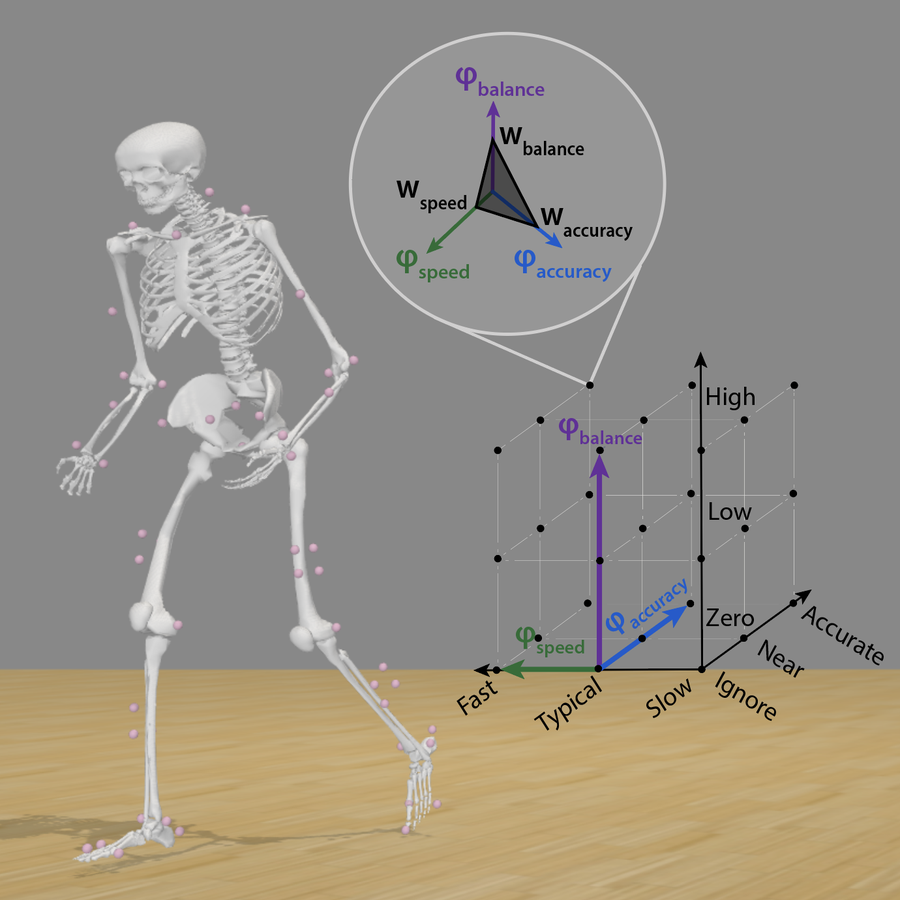
My postdoctoral work shifted toward computational modeling, combining physics-based musculoskeletal simulation with data-driven modeling to study multi-objective motor control: how the nervous system balances competing priorities like speed, accuracy, and stability during walking.

Musculoskeletal simulation of a person mid-stride beside a three-dimensional grid whose axes are walking speed, foot-placement accuracy, and balance, with arrows showing how a model trades off these competing objectives
2027–PI

Founding a New Lab

Biomedical Engineering & Robotics Engineering, Worcester Polytechnic Institute

I'll be starting a new lab at WPI, bringing these threads together: modeling motor control and designing adaptive tools to support people's mobility.

Coming soon