Research Directions
Locomotor Control Beyond the Lab
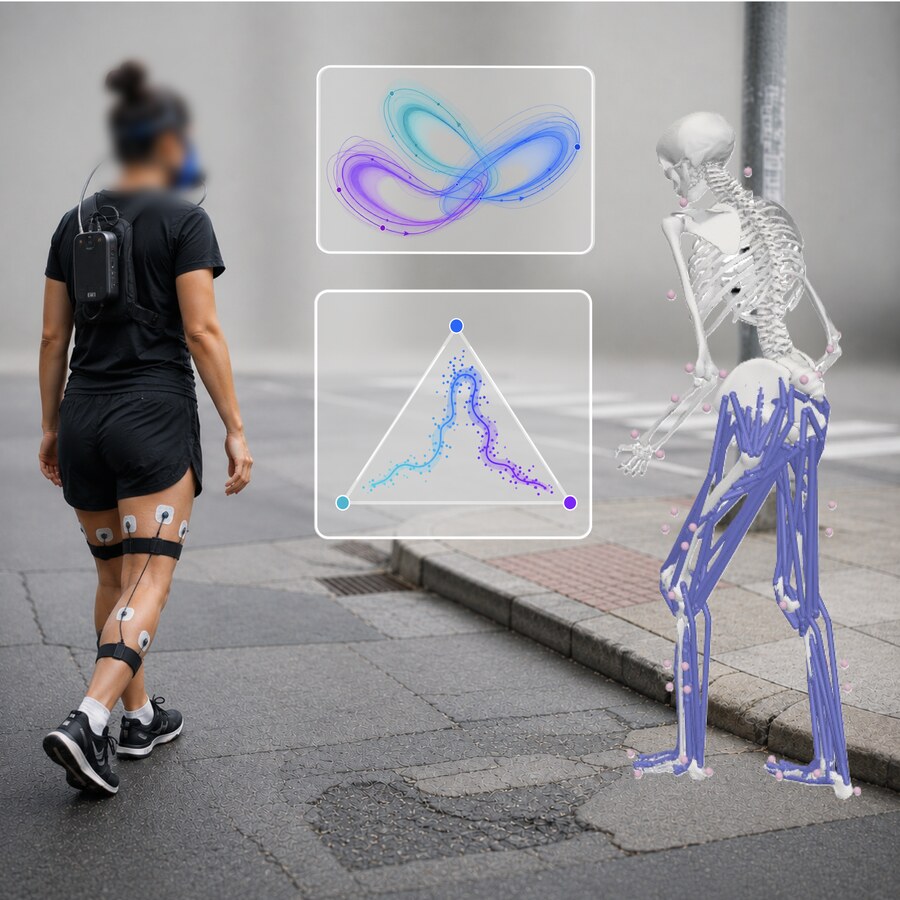
Moving through everyday environments requires reconciling competing demands, such as conserving energy while moving quickly or crossing uneven terrain while staying balanced. We are building models that infer those priorities from measured movement§. We are relating these priorities to the coordination strategies that express them and studying how both change with aging and neurological gait conditions.
wearable sensing · musculoskeletal simulation · inverse optimal control · machine learning
Holistic Exoskeleton Optimization
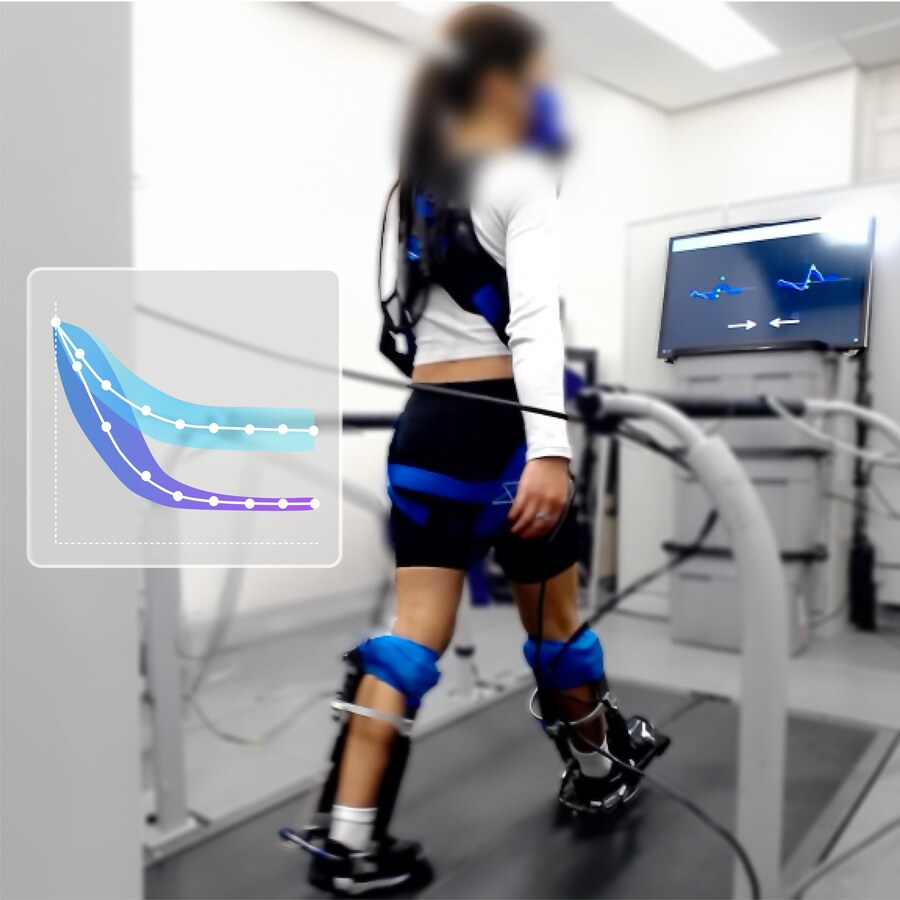
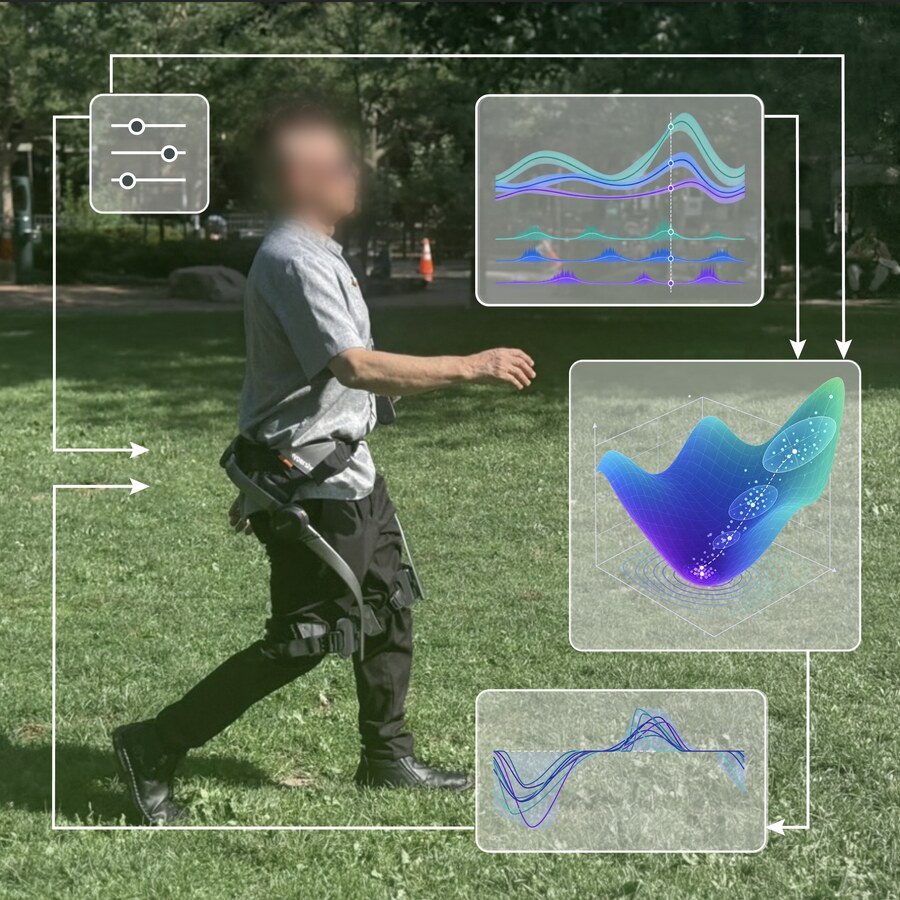
Mobility aids shape both how people move and how they perceive that movement, with responses changing over time. We are designing lower-limb exoskeleton control strategies that keep adapting as people's behavior changes, personalizing assistance to multiple objectives§ and considering perceptual outcomes alongside physical performance. Our work examines the tradeoffs among these objectives and what leads devices to be adopted rather than abandoned as people engage with technology over longer timescales.
exoskeleton hardware and control · human-in-the-loop optimization · psychophysics
Learning New Movement Strategies
Learning a new motor skill depends on interpreting cues from the body and environment, a process that well-designed feedback can accelerate. We are developing real-time biofeedback paradigms that guide people toward strategies suited to their own movement, rather than a single prescribed target§. We are investigating which signals meaningfully aid learning under which conditions and how skills learned with feedback can endure without it, supporting independence in clinical and community settings.
real-time biofeedback · haptic interfaces · practice design · motor learning and retention